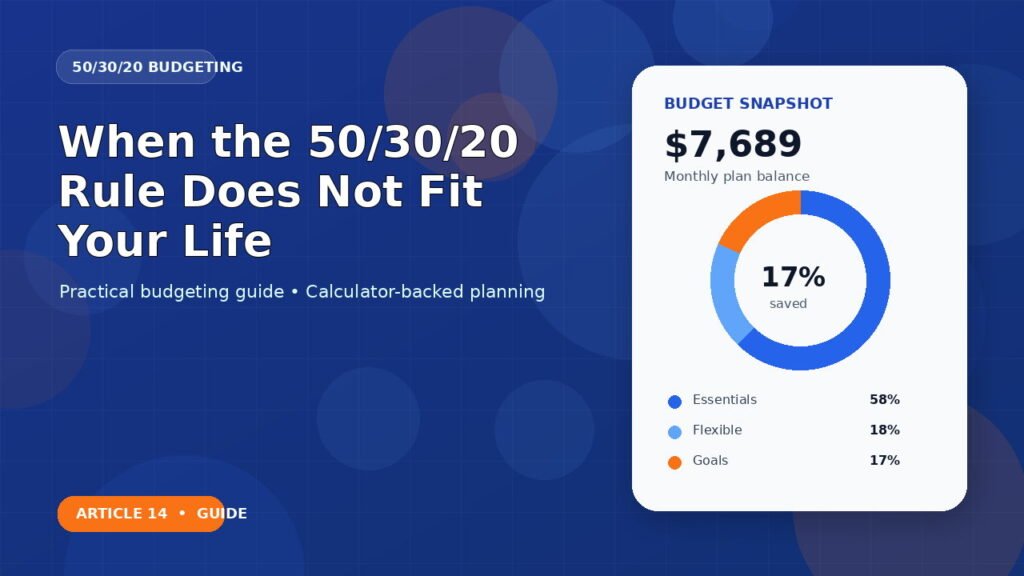
When the 50/30/20 Rule Does Not Fit Your Life is a practical guide for households whose essential costs, debt, income pattern, or goals make the standard ratio impractical. It focuses on recognizing when adaptation is useful and when a different budgeting method is more appropriate and shows how to move from incomplete financial information to a plan that can be reviewed and improved. The examples use a household facing high medical costs, aggressive debt payoff, unstable income, or a major short-term savings goal, but the method is designed to be adapted with your own take-home income, bills, spending records, savings priorities, and payment dates. Throughout the guide, the central principle is using the framework as a comparison tool rather than a pass-or-fail score. You will also see how to identify missing costs, test cautious scenarios, interpret calculator outputs, and avoid abandoning budgeting entirely because one popular ratio does not match the household. The goal is a deliberate choice of ratios or another system based on actual constraints and priorities. Use the linked 50/30/20 Budget Calculator as an educational planning aid, verify every important input, and review high-impact decisions with an appropriately qualified professional when necessary.
Define the Purpose of Alternatives to the 50/30/20 Rule
For households whose essential costs, debt, income pattern, or goals make the standard ratio impractical, the topic “Define the Purpose of Alternatives to the 50/30/20 Rule” should be handled as a clear monthly decision. Begin by trying to write down the decision this plan must support before changing any numbers. Record the source, amount, date, and payment frequency so another household member can understand how the figure was produced. Avoid abandoning budgeting entirely because one popular ratio does not match the household. Compare the proposed value with current statements, and revise only one assumption at a time when testing a different approach.
Start With an Honest Financial Baseline
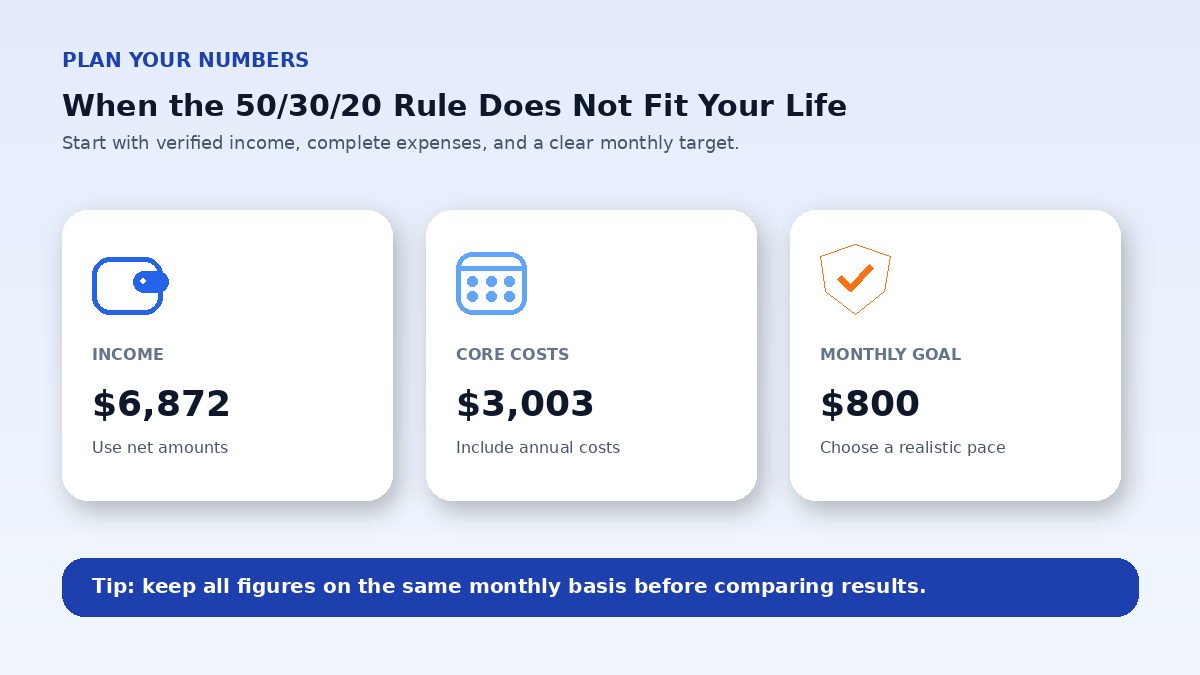
Consider a household facing high medical costs, aggressive debt payoff, unstable income, or a major short-term savings goal. This example shows why the topic “Start With an Honest Financial Baseline” deserves deliberate attention. A reliable method is to use recent statements, bills, account balances, and pay records to document the current position. Keep the first calculation conservative and label any uncertain amount so it is not mistaken for a confirmed fact. Review the result in the context of the complete household plan. The aim is better decision-making, consistent definitions, and enough flexibility to respond when actual figures differ.
Use Take-Home Income Consistently
Treat the guidance under “Use Take-Home Income Consistently” as one working part of alternatives to the 50/30/20 rule, not as an isolated rule. The practical priority is using the framework as a comparison tool rather than a pass-or-fail score. To apply it, work from money actually available after tax and payroll deductions unless the method explicitly requires another figure, then compare the outcome with recent household behavior and upcoming obligations. The section should support a deliberate choice of ratios or another system based on actual constraints and priorities. Discuss the decision with anyone affected, preserve a reasonable margin for uncertainty, and document the reason for any major change.
Separate Fixed and Flexible Commitments
This section addresses “Separate Fixed and Flexible Commitments” and its connection to recognizing when adaptation is useful and when a different budgeting method is more appropriate. The practical step is to identify obligations that are difficult to change quickly and costs that can be adjusted during the month. Use recent records, keep every figure on the same time basis, and write down any estimate that still needs confirmation. Keep the decision connected to using the framework as a comparison tool rather than a pass-or-fail score. A useful result should lead to an affordable action rather than a number that looks impressive but cannot be maintained.
Convert Irregular Costs Into Monthly Amounts
For households whose essential costs, debt, income pattern, or goals make the standard ratio impractical, the topic “Convert Irregular Costs Into Monthly Amounts” should be handled as a clear monthly decision. Begin by trying to divide annual, quarterly, and seasonal obligations into realistic monthly reserves. Record the source, amount, date, and payment frequency so another household member can understand how the figure was produced. Avoid abandoning budgeting entirely because one popular ratio does not match the household. Compare the proposed value with current statements, and revise only one assumption at a time when testing a different approach.
Map Payment Dates and Income Timing
Consider a household facing high medical costs, aggressive debt payoff, unstable income, or a major short-term savings goal. This example shows why the topic “Map Payment Dates and Income Timing” deserves deliberate attention. A reliable method is to place paydays, bill due dates, transfers, and expected irregular payments on one calendar. Keep the first calculation conservative and label any uncertain amount so it is not mistaken for a confirmed fact. Review the result in the context of the complete household plan. The aim is better decision-making, consistent definitions, and enough flexibility to respond when actual figures differ.
Create Clear Category Definitions
Treat the guidance under “Create Clear Category Definitions” as one working part of alternatives to the 50/30/20 rule, not as an isolated rule. The practical priority is using the framework as a comparison tool rather than a pass-or-fail score. To apply it, write simple rules explaining what belongs in each category and what does not, then compare the outcome with recent household behavior and upcoming obligations. The section should support a deliberate choice of ratios or another system based on actual constraints and priorities. Discuss the decision with anyone affected, preserve a reasonable margin for uncertainty, and document the reason for any major change.
Protect Essential Household Priorities First
This section addresses “Protect Essential Household Priorities First” and its connection to recognizing when adaptation is useful and when a different budgeting method is more appropriate. The practical step is to fund housing, basic food, utilities, transport, insurance, minimum obligations, and necessary care before optional spending. Use recent records, keep every figure on the same time basis, and write down any estimate that still needs confirmation. Keep the decision connected to using the framework as a comparison tool rather than a pass-or-fail score. A useful result should lead to an affordable action rather than a number that looks impressive but cannot be maintained.
Set Realistic Limits for Flexible Spending
For households whose essential costs, debt, income pattern, or goals make the standard ratio impractical, the topic “Set Realistic Limits for Flexible Spending” should be handled as a clear monthly decision. Begin by trying to base category limits on recent behavior and gradual improvement rather than an idealized month. Record the source, amount, date, and payment frequency so another household member can understand how the figure was produced. Avoid abandoning budgeting entirely because one popular ratio does not match the household. Compare the proposed value with current statements, and revise only one assumption at a time when testing a different approach.
Plan for Food Without Underestimating Reality
Consider a household facing high medical costs, aggressive debt payoff, unstable income, or a major short-term savings goal. This example shows why the topic “Plan for Food Without Underestimating Reality” deserves deliberate attention. A reliable method is to separate groceries, household supplies, takeout, work meals, and special occasions when those distinctions help decisions. Keep the first calculation conservative and label any uncertain amount so it is not mistaken for a confirmed fact. Review the result in the context of the complete household plan. The aim is better decision-making, consistent definitions, and enough flexibility to respond when actual figures differ.
Review Housing Costs and Related Expenses
Treat the guidance under “Review Housing Costs and Related Expenses” as one working part of alternatives to the 50/30/20 rule, not as an isolated rule. The practical priority is using the framework as a comparison tool rather than a pass-or-fail score. To apply it, include rent or mortgage plus utilities, maintenance, fees, insurance, taxes, and moving or repair reserves where relevant, then compare the outcome with recent household behavior and upcoming obligations. The section should support a deliberate choice of ratios or another system based on actual constraints and priorities. Discuss the decision with anyone affected, preserve a reasonable margin for uncertainty, and document the reason for any major change.
Measure Transportation as a Full Category
This section addresses “Measure Transportation as a Full Category” and its connection to recognizing when adaptation is useful and when a different budgeting method is more appropriate. The practical step is to count payments, fuel, fares, insurance, maintenance, registration, parking, tolls, and replacement planning. Use recent records, keep every figure on the same time basis, and write down any estimate that still needs confirmation. Keep the decision connected to using the framework as a comparison tool rather than a pass-or-fail score. A useful result should lead to an affordable action rather than a number that looks impressive but cannot be maintained.
Include Health, Insurance, and Care Costs
For households whose essential costs, debt, income pattern, or goals make the standard ratio impractical, the topic “Include Health, Insurance, and Care Costs” should be handled as a clear monthly decision. Begin by trying to capture premiums, prescriptions, appointments, accessibility needs, dependent care, and predictable out-of-pocket expenses. Record the source, amount, date, and payment frequency so another household member can understand how the figure was produced. Avoid abandoning budgeting entirely because one popular ratio does not match the household. Compare the proposed value with current statements, and revise only one assumption at a time when testing a different approach.
Handle Debt Payments With Clear Priorities
Consider a household facing high medical costs, aggressive debt payoff, unstable income, or a major short-term savings goal. This example shows why the topic “Handle Debt Payments With Clear Priorities” deserves deliberate attention. A reliable method is to separate required minimums from optional extra principal payments and identify the balance receiving additional money. Keep the first calculation conservative and label any uncertain amount so it is not mistaken for a confirmed fact. Review the result in the context of the complete household plan. The aim is better decision-making, consistent definitions, and enough flexibility to respond when actual figures differ.
Treat Savings as a Planned Assignment
Treat the guidance under “Treat Savings as a Planned Assignment” as one working part of alternatives to the 50/30/20 rule, not as an isolated rule. The practical priority is using the framework as a comparison tool rather than a pass-or-fail score. To apply it, schedule savings transfers with the same seriousness as recurring bills while keeping the amount affordable, then compare the outcome with recent household behavior and upcoming obligations. The section should support a deliberate choice of ratios or another system based on actual constraints and priorities. Discuss the decision with anyone affected, preserve a reasonable margin for uncertainty, and document the reason for any major change.
Build Sinking Funds for Predictable Expenses
This section addresses “Build Sinking Funds for Predictable Expenses” and its connection to recognizing when adaptation is useful and when a different budgeting method is more appropriate. The practical step is to create named reserves for known future costs instead of waiting for the payment month. Use recent records, keep every figure on the same time basis, and write down any estimate that still needs confirmation. Keep the decision connected to using the framework as a comparison tool rather than a pass-or-fail score. A useful result should lead to an affordable action rather than a number that looks impressive but cannot be maintained.
Maintain a Practical Working Buffer
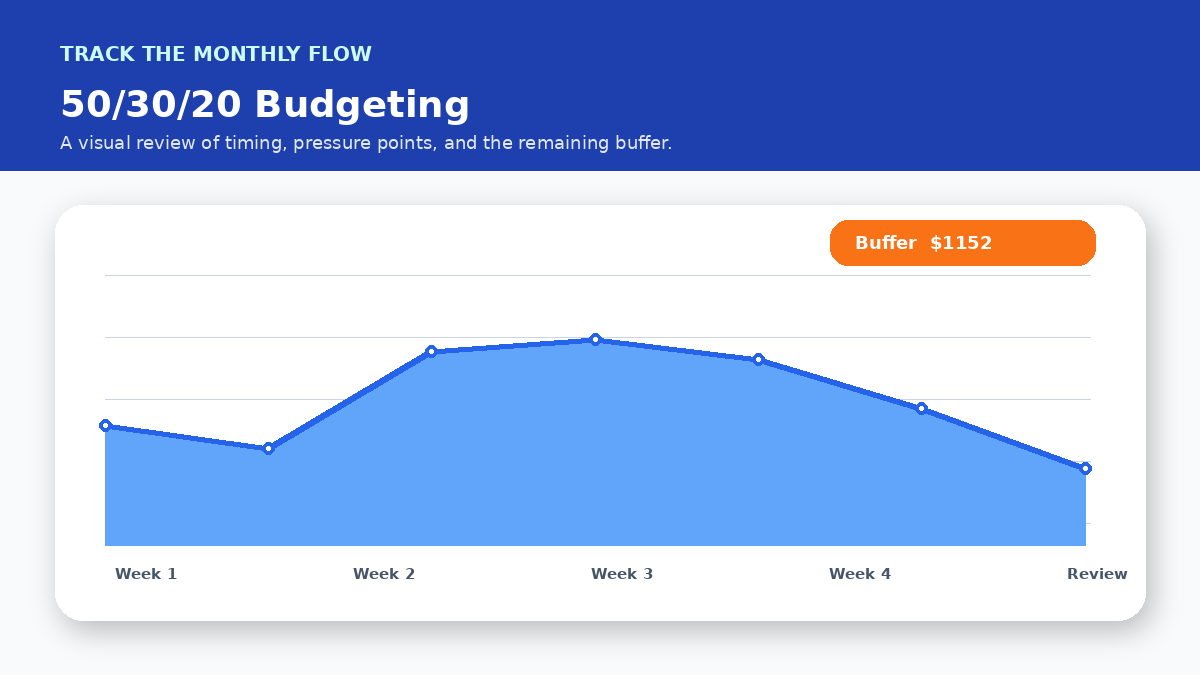
For households whose essential costs, debt, income pattern, or goals make the standard ratio impractical, the topic “Maintain a Practical Working Buffer” should be handled as a clear monthly decision. Begin by trying to leave a small amount uncommitted or in checking to absorb timing differences and normal category variation. Record the source, amount, date, and payment frequency so another household member can understand how the figure was produced. Avoid abandoning budgeting entirely because one popular ratio does not match the household. Compare the proposed value with current statements, and revise only one assumption at a time when testing a different approach.
Use Conservative Assumptions When Uncertain
Consider a household facing high medical costs, aggressive debt payoff, unstable income, or a major short-term savings goal. This example shows why the topic “Use Conservative Assumptions When Uncertain” deserves deliberate attention. A reliable method is to choose cautious income and expense estimates when an optimistic assumption could create a shortfall. Keep the first calculation conservative and label any uncertain amount so it is not mistaken for a confirmed fact. Review the result in the context of the complete household plan. The aim is better decision-making, consistent definitions, and enough flexibility to respond when actual figures differ.
Test a Realistic Household Scenario
Treat the guidance under “Test a Realistic Household Scenario” as one working part of alternatives to the 50/30/20 rule, not as an isolated rule. The practical priority is using the framework as a comparison tool rather than a pass-or-fail score. To apply it, enter one expected case using current information before experimenting with more ambitious targets, then compare the outcome with recent household behavior and upcoming obligations. The section should support a deliberate choice of ratios or another system based on actual constraints and priorities. Discuss the decision with anyone affected, preserve a reasonable margin for uncertainty, and document the reason for any major change.
Compare Best, Expected, and Cautious Cases
This section addresses “Compare Best, Expected, and Cautious Cases” and its connection to recognizing when adaptation is useful and when a different budgeting method is more appropriate. The practical step is to change one important assumption at a time to see how the result responds under different conditions. Use recent records, keep every figure on the same time basis, and write down any estimate that still needs confirmation. Keep the decision connected to using the framework as a comparison tool rather than a pass-or-fail score. A useful result should lead to an affordable action rather than a number that looks impressive but cannot be maintained.
Understand the Calculator’s Main Result
For households whose essential costs, debt, income pattern, or goals make the standard ratio impractical, the topic “Understand the Calculator’s Main Result” should be handled as a clear monthly decision. Begin by trying to identify the output that directly answers the article’s core decision and note the units and period used. Record the source, amount, date, and payment frequency so another household member can understand how the figure was produced. Avoid abandoning budgeting entirely because one popular ratio does not match the household. Compare the proposed value with current statements, and revise only one assumption at a time when testing a different approach.
Interpret Percentages Without Losing Context
Consider a household facing high medical costs, aggressive debt payoff, unstable income, or a major short-term savings goal. This example shows why the topic “Interpret Percentages Without Losing Context” deserves deliberate attention. A reliable method is to compare ratios over time and against personal constraints rather than treating a benchmark as a verdict. Keep the first calculation conservative and label any uncertain amount so it is not mistaken for a confirmed fact. Review the result in the context of the complete household plan. The aim is better decision-making, consistent definitions, and enough flexibility to respond when actual figures differ.
Watch for Missing and Duplicate Entries
Treat the guidance under “Watch for Missing and Duplicate Entries” as one working part of alternatives to the 50/30/20 rule, not as an isolated rule. The practical priority is using the framework as a comparison tool rather than a pass-or-fail score. To apply it, check transfers, refunds, reimbursements, credit-card payments, and repeated bills before trusting totals, then compare the outcome with recent household behavior and upcoming obligations. The section should support a deliberate choice of ratios or another system based on actual constraints and priorities. Discuss the decision with anyone affected, preserve a reasonable margin for uncertainty, and document the reason for any major change.
Identify the Largest Financial Drivers
This section addresses “Identify the Largest Financial Drivers” and its connection to recognizing when adaptation is useful and when a different budgeting method is more appropriate. The practical step is to rank categories by dollar amount, flexibility, and long-term effect before focusing on minor purchases. Use recent records, keep every figure on the same time basis, and write down any estimate that still needs confirmation. Keep the decision connected to using the framework as a comparison tool rather than a pass-or-fail score. A useful result should lead to an affordable action rather than a number that looks impressive but cannot be maintained.
Choose the First Adjustment Deliberately
For households whose essential costs, debt, income pattern, or goals make the standard ratio impractical, the topic “Choose the First Adjustment Deliberately” should be handled as a clear monthly decision. Begin by trying to make one change that improves the result while protecting essential needs and important commitments. Record the source, amount, date, and payment frequency so another household member can understand how the figure was produced. Avoid abandoning budgeting entirely because one popular ratio does not match the household. Compare the proposed value with current statements, and revise only one assumption at a time when testing a different approach.
Avoid Cuts That Cannot Be Sustained
Consider a household facing high medical costs, aggressive debt payoff, unstable income, or a major short-term savings goal. This example shows why the topic “Avoid Cuts That Cannot Be Sustained” deserves deliberate attention. A reliable method is to prefer repeatable changes and negotiated costs over restrictions that create frustration and rebound spending. Keep the first calculation conservative and label any uncertain amount so it is not mistaken for a confirmed fact. Review the result in the context of the complete household plan. The aim is better decision-making, consistent definitions, and enough flexibility to respond when actual figures differ.
Coordinate Shared Household Decisions
Treat the guidance under “Coordinate Shared Household Decisions” as one working part of alternatives to the 50/30/20 rule, not as an isolated rule. The practical priority is using the framework as a comparison tool rather than a pass-or-fail score. To apply it, agree on responsibilities, contribution rules, category definitions, and communication points before enforcing limits, then compare the outcome with recent household behavior and upcoming obligations. The section should support a deliberate choice of ratios or another system based on actual constraints and priorities. Discuss the decision with anyone affected, preserve a reasonable margin for uncertainty, and document the reason for any major change.
Use Automation Without Losing Oversight
This section addresses “Use Automation Without Losing Oversight” and its connection to recognizing when adaptation is useful and when a different budgeting method is more appropriate. The practical step is to automate stable bills and transfers while reviewing amounts, dates, and account balances regularly. Use recent records, keep every figure on the same time basis, and write down any estimate that still needs confirmation. Keep the decision connected to using the framework as a comparison tool rather than a pass-or-fail score. A useful result should lead to an affordable action rather than a number that looks impressive but cannot be maintained.
Track Actual Results During the Month
For households whose essential costs, debt, income pattern, or goals make the standard ratio impractical, the topic “Track Actual Results During the Month” should be handled as a clear monthly decision. Begin by trying to record or import spending often enough to know what remains before making the next decision. Record the source, amount, date, and payment frequency so another household member can understand how the figure was produced. Avoid abandoning budgeting entirely because one popular ratio does not match the household. Compare the proposed value with current statements, and revise only one assumption at a time when testing a different approach.
Run a Short Weekly Financial Check
Consider a household facing high medical costs, aggressive debt payoff, unstable income, or a major short-term savings goal. This example shows why the topic “Run a Short Weekly Financial Check” deserves deliberate attention. A reliable method is to review upcoming bills, category balances, account cash, and changes in income or household needs. Keep the first calculation conservative and label any uncertain amount so it is not mistaken for a confirmed fact. Review the result in the context of the complete household plan. The aim is better decision-making, consistent definitions, and enough flexibility to respond when actual figures differ.
Complete a Structured Monthly Review
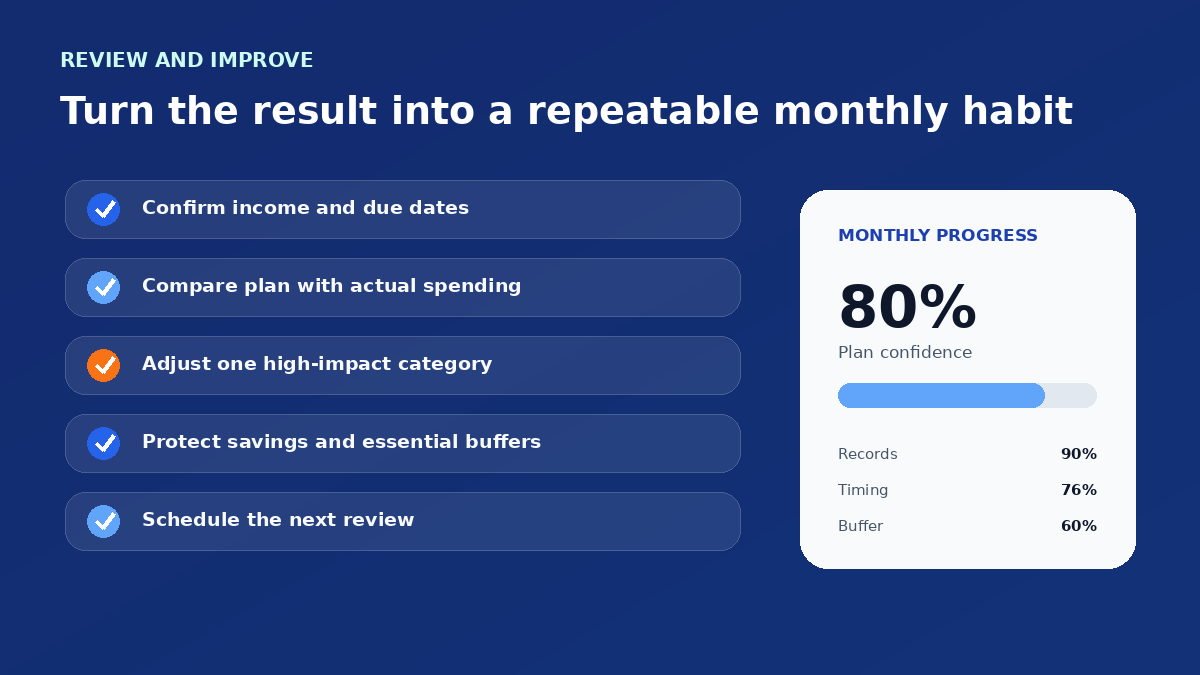
Treat the guidance under “Complete a Structured Monthly Review” as one working part of alternatives to the 50/30/20 rule, not as an isolated rule. The practical priority is using the framework as a comparison tool rather than a pass-or-fail score. To apply it, compare planned and actual figures, explain meaningful variances, and carry lessons into the next plan, then compare the outcome with recent household behavior and upcoming obligations. The section should support a deliberate choice of ratios or another system based on actual constraints and priorities. Discuss the decision with anyone affected, preserve a reasonable margin for uncertainty, and document the reason for any major change.
Update the Plan After Life Changes
This section addresses “Update the Plan After Life Changes” and its connection to recognizing when adaptation is useful and when a different budgeting method is more appropriate. The practical step is to recalculate after changes in employment, housing, family size, health, debt, insurance, or major goals. Use recent records, keep every figure on the same time basis, and write down any estimate that still needs confirmation. Keep the decision connected to using the framework as a comparison tool rather than a pass-or-fail score. A useful result should lead to an affordable action rather than a number that looks impressive but cannot be maintained.
Prepare for Seasonal and Annual Pressure
For households whose essential costs, debt, income pattern, or goals make the standard ratio impractical, the topic “Prepare for Seasonal and Annual Pressure” should be handled as a clear monthly decision. Begin by trying to look several months ahead for predictable periods when income or expenses will differ from normal. Record the source, amount, date, and payment frequency so another household member can understand how the figure was produced. Avoid abandoning budgeting entirely because one popular ratio does not match the household. Compare the proposed value with current statements, and revise only one assumption at a time when testing a different approach.
Respond Productively to an Unexpected Setback
Consider a household facing high medical costs, aggressive debt payoff, unstable income, or a major short-term savings goal. This example shows why the topic “Respond Productively to an Unexpected Setback” deserves deliberate attention. A reliable method is to protect immediate essentials, pause lower priorities, document the event, and create a recovery sequence. Keep the first calculation conservative and label any uncertain amount so it is not mistaken for a confirmed fact. Review the result in the context of the complete household plan. The aim is better decision-making, consistent definitions, and enough flexibility to respond when actual figures differ.
Use the 50/30/20 Budget Calculator Step by Step
Treat the guidance under “Use the 50/30/20 Budget Calculator Step by Step” as one working part of alternatives to the 50/30/20 rule, not as an isolated rule. The practical priority is using the framework as a comparison tool rather than a pass-or-fail score. To apply it, enter accurate values, review category labels, calculate the result, and save the assumptions used, then compare the outcome with recent household behavior and upcoming obligations. The section should support a deliberate choice of ratios or another system based on actual constraints and priorities. Discuss the decision with anyone affected, preserve a reasonable margin for uncertainty, and document the reason for any major change. Open the 50/30/20 Budget Calculator and enter the same values described in your written baseline.
Check Whether the Result Is Actionable
This section addresses “Check Whether the Result Is Actionable” and its connection to recognizing when adaptation is useful and when a different budgeting method is more appropriate. The practical step is to translate the output into a specific amount, date, category change, or conversation rather than stopping at a number. Use recent records, keep every figure on the same time basis, and write down any estimate that still needs confirmation. Keep the decision connected to using the framework as a comparison tool rather than a pass-or-fail score. A useful result should lead to an affordable action rather than a number that looks impressive but cannot be maintained.
Recognize Common Planning Mistakes
For households whose essential costs, debt, income pattern, or goals make the standard ratio impractical, the topic “Recognize Common Planning Mistakes” should be handled as a clear monthly decision. Begin by trying to look for optimistic income, omitted costs, inconsistent periods, unclear categories, and decisions based on incomplete data. Record the source, amount, date, and payment frequency so another household member can understand how the figure was produced. Avoid abandoning budgeting entirely because one popular ratio does not match the household. Compare the proposed value with current statements, and revise only one assumption at a time when testing a different approach.
Know the Limits of Online Calculations
Consider a household facing high medical costs, aggressive debt payoff, unstable income, or a major short-term savings goal. This example shows why the topic “Know the Limits of Online Calculations” deserves deliberate attention. A reliable method is to remember that a calculator cannot understand every legal, tax, medical, contractual, or personal detail. Keep the first calculation conservative and label any uncertain amount so it is not mistaken for a confirmed fact. Review the result in the context of the complete household plan. The aim is better decision-making, consistent definitions, and enough flexibility to respond when actual figures differ.
Decide When Professional Advice Is Appropriate
Treat the guidance under “Decide When Professional Advice Is Appropriate” as one working part of alternatives to the 50/30/20 rule, not as an isolated rule. The practical priority is using the framework as a comparison tool rather than a pass-or-fail score. To apply it, seek qualified help when the decision involves serious debt, legal rights, tax complexity, insolvency, or high financial impact, then compare the outcome with recent household behavior and upcoming obligations. The section should support a deliberate choice of ratios or another system based on actual constraints and priorities. Discuss the decision with anyone affected, preserve a reasonable margin for uncertainty, and document the reason for any major change.
Create a Clear Action Plan for Next Month
This section addresses “Create a Clear Action Plan for Next Month” and its connection to recognizing when adaptation is useful and when a different budgeting method is more appropriate. The practical step is to write the next three actions, assign responsibility, and set a date for checking progress. Use recent records, keep every figure on the same time basis, and write down any estimate that still needs confirmation. Keep the decision connected to using the framework as a comparison tool rather than a pass-or-fail score. A useful result should lead to an affordable action rather than a number that looks impressive but cannot be maintained.
Frequently Asked Questions
Who benefits most from this budgeting approach?
This approach is most useful for households whose essential costs, debt, income pattern, or goals make the standard ratio impractical. It can also help anyone who needs a clearer comparison between current figures and a more deliberate plan. The method should be adapted to household size, income reliability, debt obligations, local costs, and personal priorities rather than copied without review.
How often should the figures be updated?
Review the core figures at least once each month and update them sooner when income, housing, insurance, debt, family responsibilities, or major due dates change. Weekly checks can be brief, but they are valuable when cash timing is tight or several variable categories need active monitoring.
Should gross income or take-home income be used?
For household budgeting, take-home income is usually the clearest starting point because it represents money available after taxes and payroll deductions. Use gross income only when a specific calculation requires it, and never mix gross and net figures in the same comparison without labeling them clearly.
How does the 50/30/20 Budget Calculator help?
The 50/30/20 Budget Calculator organizes the relevant inputs, performs the arithmetic consistently, and presents results that are easier to compare. It does not decide what is affordable or appropriate for your household. The quality of the output still depends on complete inputs, accurate categories, and realistic assumptions.
What should be done when the result looks unrealistic?
Check for missing annual costs, duplicated transfers, incorrect payment frequencies, unusually optimistic income, and categories that were defined inconsistently. Then compare the result with recent statements. Avoid abandoning budgeting entirely because one popular ratio does not match the household. Recalculate after correcting one issue at a time so the source of the change remains visible.
When is professional financial guidance appropriate?
Consider qualified guidance when the plan involves insolvency, serious debt, foreclosure risk, legal obligations, tax complexity, investment decisions, or consequences that could materially affect housing, health, or family security. An online calculator and educational article cannot replace advice based on your complete circumstances.
Conclusion
When the 50/30/20 Rule Does Not Fit Your Life becomes useful when the ideas are converted into a small number of measurable actions. Begin with verified records, keep every amount on the same time basis, and focus on using the framework as a comparison tool rather than a pass-or-fail score. Use the 50/30/20 Budget Calculator to test the current position before changing assumptions, then save the inputs that produced the result. The best plan is not the one with the most categories or the most aggressive target; it is the one that can be followed, reviewed, and corrected. Avoid abandoning budgeting entirely because one popular ratio does not match the household, build a reasonable buffer for uncertainty, and discuss shared decisions with everyone affected. A monthly review will show whether the plan is producing a deliberate choice of ratios or another system based on actual constraints and priorities.